







Search Results for: signboard color
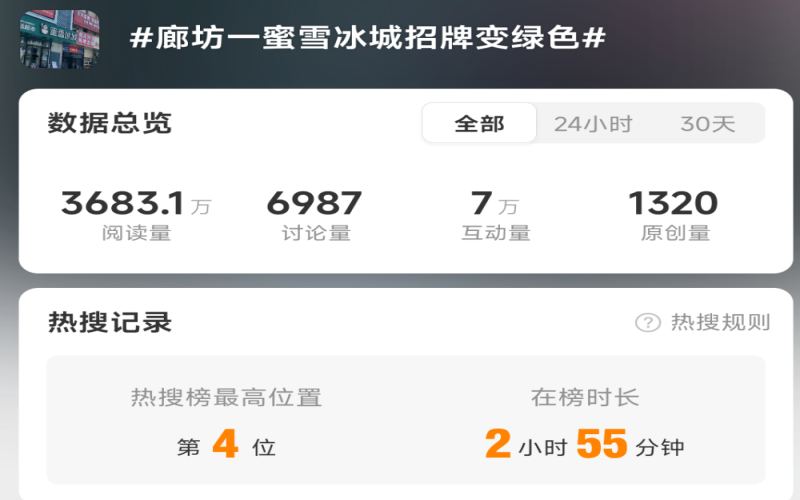
Sanhe City Signage Color Change Controversy: Mixue Bingcheng Required to Change to Green, Red, Blue, and Black Backgrounds Banned
Recently, a notice in Yanjiao, Sanhe, Hebei regarding the color rectification of merchant signs has drawn attention. The local urban management department verbally notified merchants that red, blue, and black storefront signs must be changed to other colors, and the costs of removal and replacement must be borne by the merchants themselves. Signboards of brand stores such as Mixue Bingcheng were forced to change to green or gray-black, and the incident quickly topped Weibo's trending searches. The Sanhe City Urban Management Bureau responded that this move was one step ahead in accordance with urban planning, but the relevant documents had not yet been issued. The similar phenomenon of "unified store signs" is not an isolated case, and this time targeting only common basic commercial color schemes not only lacks sufficient justification but also weakens brand recognition, sparking widespread controversy. [more…]
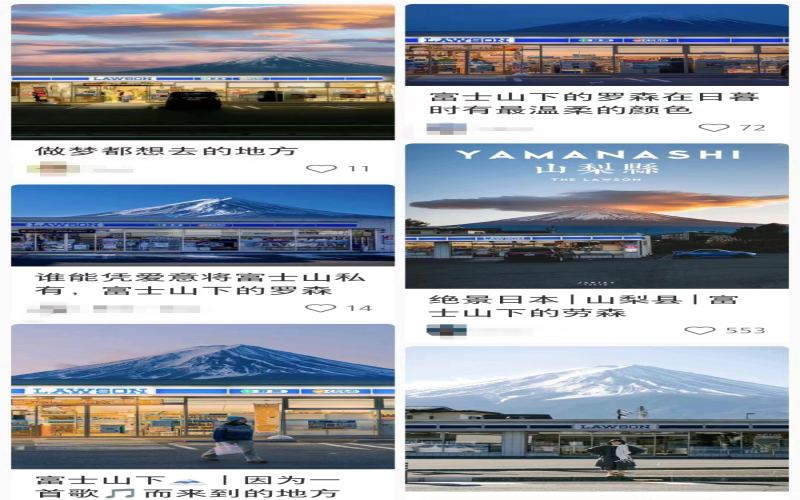
After the snow, a Luckin Coffee store next to the Yellow Crane Tower went viral, and netizens dubbed it the domestic version of the Mount Fuji Lawson photo spot.
Eason Chan's "Under Mount Fuji" turned the Lawson convenience store at the foot of Mount Fuji in Japan into a must-visit spot for countless tourists. Recently, after a heavy snowstorm, a Luckin Coffee store next to the Yellow Crane Tower in Wuhan unexpectedly went viral, dubbed by netizens as the "domestic version of Lawson under Mount Fuji." The blue signage contrasting with the snow-covered Yellow Crane Tower bears a striking resemblance in composition to the Lawson by Mount Fuji, sparking heated discussion on social media. Some praised Luckin for its precise location choice, while others joked that the ice cream cones and fences in front of the store look like a security booth. Behind this snowscape check-in craze, should Luckin really settle up on the promotional fees? Let's take a look at the brilliant comments from netizens. [more…]
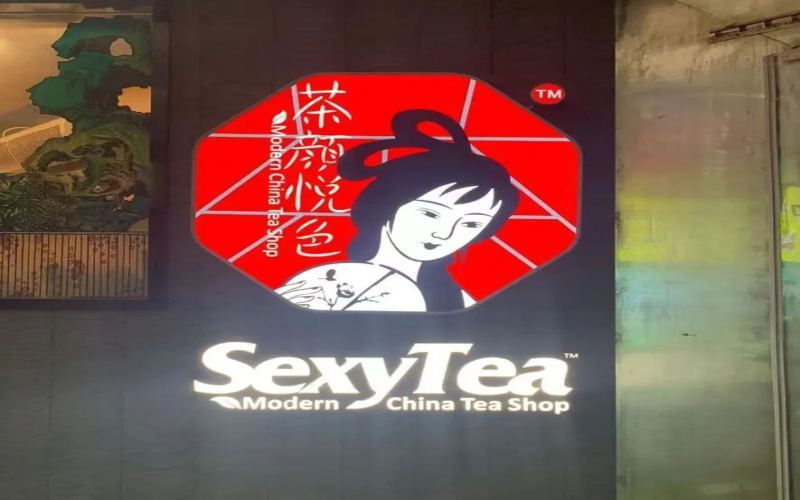
SexyTea, the English logo of Chayan Yuese, Sparks Controversy Again: An Expression of Charm or a Marketing Misstep?
Recently, Nanjing's third Chayan Yuese store sparked widespread discussion online for using "SexyTea" as its English signage. Some people believe the term clashes with the brand's classical and gentle tone, and may even be disrespectful to women; others feel that "Sexy" inherently means charming and attractive, and there's no need to overinterpret it. In fact, this is not the first time Chayan Yuese has fallen into controversy over its copy or signage. Previously, the "picking up scraps" cup copy prompted an apology for objectifying women. This article sorts out the sequence of events, various viewpoints, and regulatory responses, and includes professional coffee information channels for coffee enthusiasts and brand observers to reference. [more…]
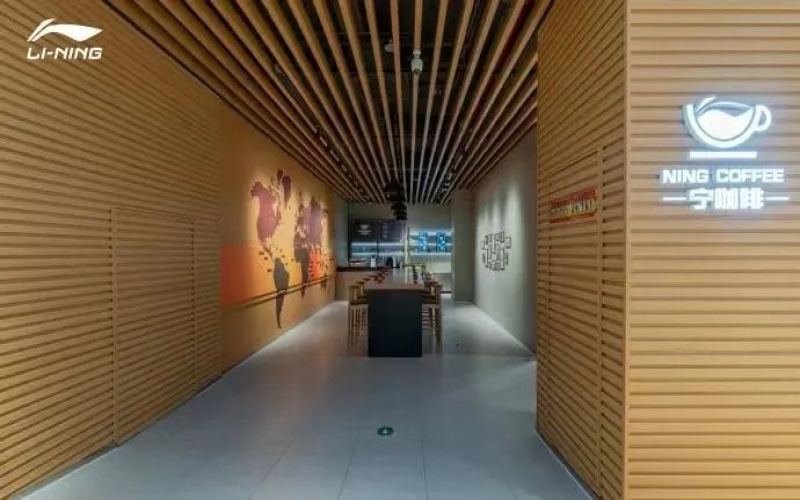
Xtep's cross-industry coffee debut store lands in Chengdu—why is the signboard not "Te Coffee" but COSINE KASHU?
Another case of a sports brand entering the coffee arena. Following Li-Ning's launch of Ning Coffee, Xtep, which has over 6,251 offline stores, has also filed trademark applications for "T Coffee" and "XTEP COFFEE." Recently, Xtep's first coffee shop opened within its flagship store in the Chunxi Road commercial district of Chengdu. Surprisingly, the store sign does not display "T Coffee" but instead shows "COSINE COFFEE." It turns out this is a collaborative store created by Xtep and COSINE, a trendy beverage brand founded in Shanghai in 2021. Rather than opting for a self-operated model, Xtep chose collaboration to reduce the risks of cross-industry expansion and test the waters. Whether this store is an attempt by Xtep to develop a side business or merely a supporting facility to enhance the in-store consumer experience, the company has not yet given a clear response. [more…]
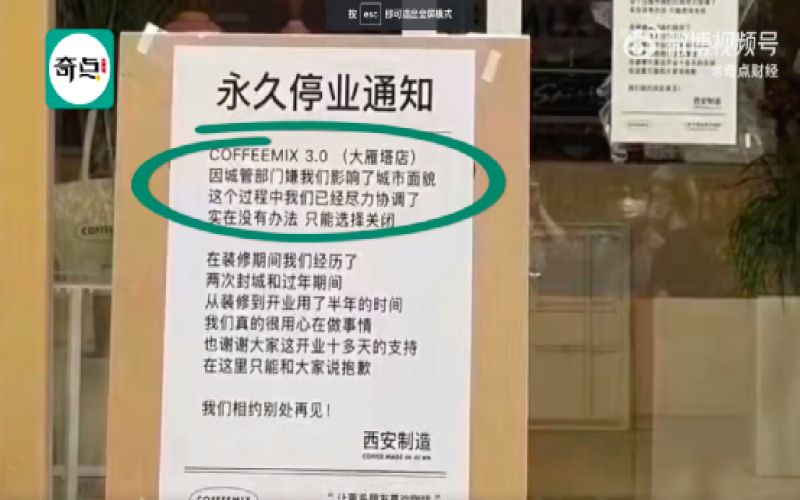
A cafe next to Xi'an's Big Wild Goose Pagoda was demolished because its exterior style did not match the district's character, and it announced permanent closure just over ten days after opening.
The decor of a coffee shop is often an important factor in attracting young consumers, and many community-oriented stores have also adopted influencer-style designs to cater to the market. However, when the appearance of a storefront conflicts with the overall style of the neighborhood it is located in, contradictions arise. A coffee shop near the Big Wild Goose Pagoda scenic area in Xi'an was asked by the urban management department to make rectifications just over ten days after opening because the color of its facade was incompatible with the surrounding Tang-style architecture. In the end, it chose to permanently close due to failure to reach an agreement. The incident sparked heated discussion among netizens: some believed that urban management should not be uniform, while others felt that areas around scenic spots should comply with unified planning. This article will recount the course of the incident and compare it with the successful case of Starbucks in Qingguo Lane, Changzhou, to explore how coffee shops and historic districts can coexist harmoniously. [more…]
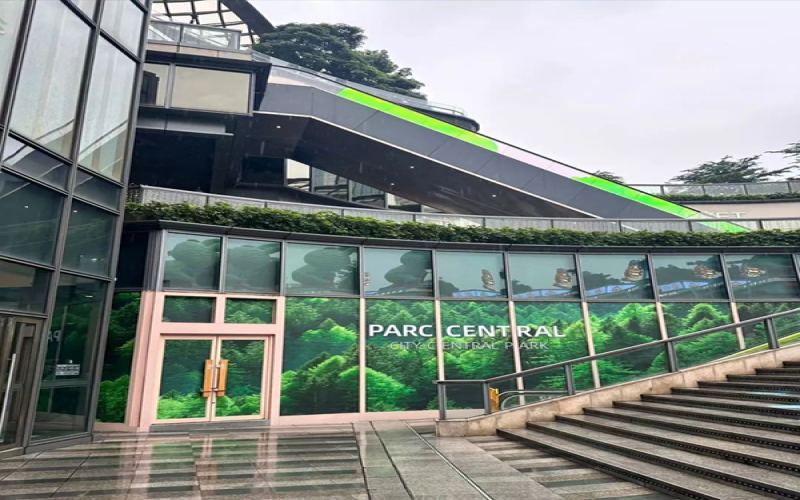
Nayuki's PRO store at Guangzhou Tianhuan Plaza suddenly withdrew from the site. Why did this CBD flagship store, which had been operating for over four years, close just like that?
The Naixue store in the sunken plaza of Guangzhou Tianhuan Plaza was quietly withdrawn without any prior announcement. The orange-pink signboard was removed, and advertising fabric was pasted on the floor-to-ceiling glass, leaving many regular customers astonished. This Naixue PRO store, which opened in May 2021, was the first PRO store on the central axis of Guangzhou's CBD. In addition to regular tea drinks, it also offered coffee, baked goods, and snack merchandise, and had long served as a showcase for the brand's co-branded theme stores. After operating for more than four years with stable customer flow and continuous events, it suddenly disappeared one day, sparking various consumer speculations about the reason for the closure and drawing renewed attention to Naixue's ongoing trend of store contraction in recent years. [more…]
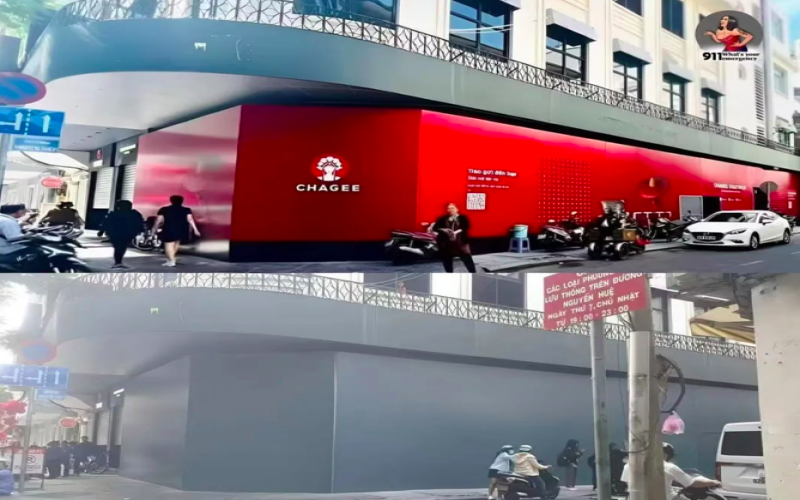
CHAGEE Boycotted by Vietnamese and Malaysian Users Over Map Labeling: How Much Has Store Operations Been Affected?
Recently, Chagee sparked boycotts among netizens in Vietnam and Malaysia successively due to a background image in its app that included the nine-dash line map. Vietnam not only removed the app from its platforms but also dismantled the signboard of the first store in Ho Chi Minh City; after Malaysian netizens discovered the same issue, they too joined the chorus of criticism. Although the brand has deleted the controversial image, the public outcry has not yet subsided. It is worth noting that, unlike brands such as Starbucks, which faced boycotts over the Israeli-Palestinian conflict leading to the closure of numerous stores, Chagee's offline stores in Kuala Lumpur have maintained steady takeout orders. This article will review the sequence of events and their actual impact on the brand's operations. [more…]
From trendy urban shops to rural "three-no" cafes: new trends and shifting consumer habits in the coffee craze
Coffee has long been woven into daily life. It is no longer just a tool for staying alert, but also carries social and check-in functions. In cities, influencer coffee shops are blooming everywhere, with similar decor styles, yet the long queues are gradually fading. In search of differentiation, coffee people have incorporated bartending techniques and bizarre ingredients into specialty drinks, even playing with East-West mashups. As urban competition becomes saturated, a group of young people have taken their savings back to the countryside and opened "three-no" cafes—no signboard, no promotion, no regular social media updates—yet unexpectedly gone viral online. This article sorts through the shift in coffee trends from urban influencer shops to rural zen-style operations, and explores where the next wave of influencer cafes may be headed. [more…]

Milk tea shop community group buying involved in fraud with nearly 200 million in transaction flow; after the brand terminated cooperation, the store changed its sign and continued operating.
A bubble tea franchise store in Wuxi appears to run community group buys and membership top-ups on the surface, but behind the scenes it is suspected of large-scale fraud. Over a thousand local people have fallen victim, with transaction flows of nearly 200 million yuan, and even people in Shanghai, Zhejiang, Anhui and other places have been caught up in it. Even more surprisingly, the operator had compulsory measures changed because of pregnancy, and afterward continued to operate and keep selling low-priced products. The brand owner eventually announced the termination of cooperation and removed the signage, but the store changed its name and still opened as usual, and was still constantly hiring. What exactly is going on? What should ordinary consumers and job seekers pay attention to? [more…]
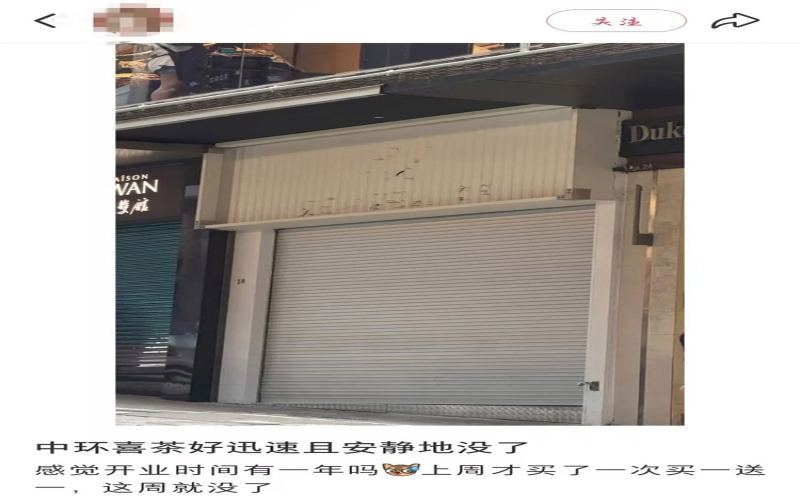
Heytea's Wellington Street store in Central shuts down abruptly, signaling a shift in the brand's store layout across Hong Kong's core commercial districts
The Heytea store on Wellington Street in Central, Hong Kong, suddenly closed without any warning, sparking widespread discussion among nearby consumers and netizens. Since opening in March 2024, the store had quickly gained popularity through promotions such as buy-one-get-one-free offers and city-exclusive fridge magnets, maintaining a steady daily flow of customers and becoming a popular check-in spot for many residents and tourists. However, overnight, the store's signage was removed, the doors were locked, and the store's information was also taken down from the official mini-program. The reason for the closure has not yet been clarified—some speculate it is related to the high rents in Central or the expiration of the lease, while others believe it is a proactive adjustment by Heytea to its market layout. The brand responded that it evaluates store operations on an irregular basis, and whether it will return to Central in the future remains worth watching. [more…]
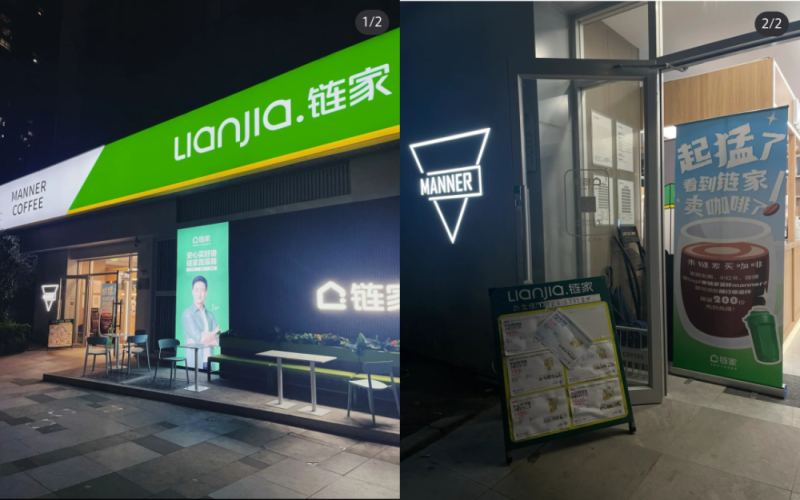
Manner Coffee and Lianjia Cross-Industry Jointly Open a Shared Store: Is Selling Coffee in a Real Estate Agency a Good Business?
Recently, a netizen in Shanghai discovered that a Manner Coffee had actually opened inside a Lianjia store, with the two brands sharing the same signboard—white and green each taking up half. Upon entering, one could see both Manner's inverted triangle logo and Lianjia's property listing boards. Was this Manner's attempt to expand into community channels, or had Lianjia taken a stake in the coffee brand? The answer was finally revealed when Lianjia's official WeChat account posted on April 7 confirming the official opening of this shared store at No. 184, Lane 100, Zhongtan Road. Manner has always chosen locations in core business districts or areas with dense office buildings. This time, moving its counter into a community and sharing space with a real estate agency has sparked quite a bit of discussion. Some are looking forward to it, some are joking about it, and others question whether the two consumption scenarios can truly integrate. This article takes you through the ins and outs of this cross-industry collaboration. [more…]
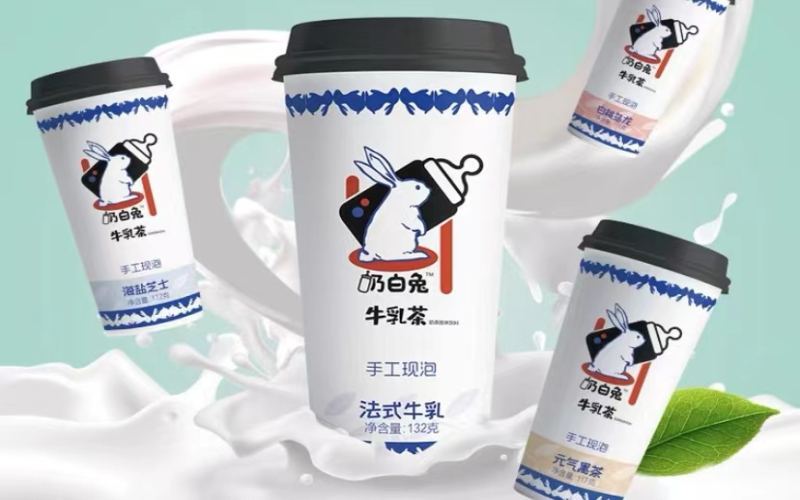
White Rabbit Milk Tea Counterfeited, Triggering Trademark Enforcement; Guangming Dairy Awarded 250,000 Yuan in First-Instance Ruling
In childhood memories, White Rabbit milk candy holds a special place, but now it is being maliciously exploited by some merchants and turned into the signboard of knockoff milk tea. Recently, Bright Dairy filed a lawsuit against two food companies and a seller for trademark infringement of "White Rabbit," and the court ruled in the first instance that the infringing parties must pay 250,000 yuan in compensation. This case not only exposed the true face of "internet-famous White Rabbit milk tea," but also once again aroused people's attention to counterfeit and shoddy products. This article will take you through the ins and outs of the incident and discuss how to distinguish genuine products from knockoffs and protect your own rights and interests. [more…]
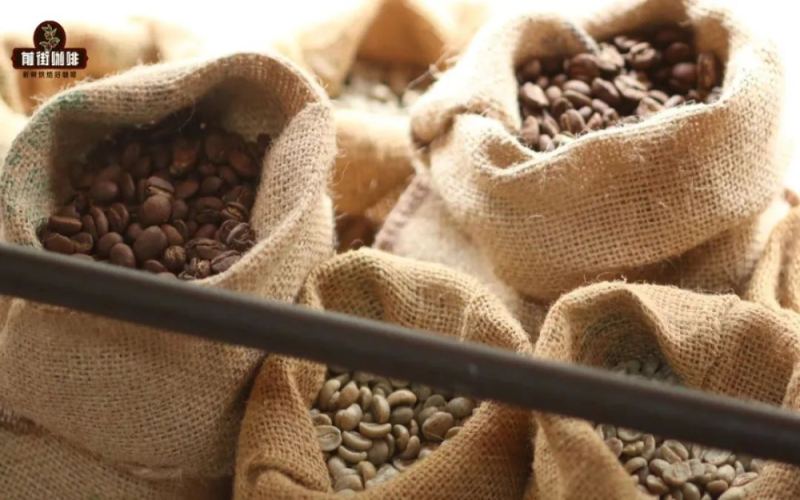
What Exactly Is the Relationship Between Arabica and Typica? A Clear Explanation of Specialty Coffee Bean Variety Classification in One Article
When buying coffee, the phrase "100% Arabica" commonly seen on packaging has almost become synonymous with quality, but the classification of coffee varieties is far more complex than this phrase suggests. Under Arabica, there are numerous sub-varieties, among which Typica is the most representative. Typica has a clean, delicate flavor and high balance, but due to low yield and weak disease resistance, it is difficult to promote on a large scale. In Yunnan's production areas, Catimor is now relied upon more to fill the yield gap. This article, from the perspective of Front Street, will sort out the relationship between the two major species, Arabica and Canephora, explain in detail Typica's origins, plant characteristics, and flavor performance, and clarify why Catimor is more favored in commercial cultivation. [more…]
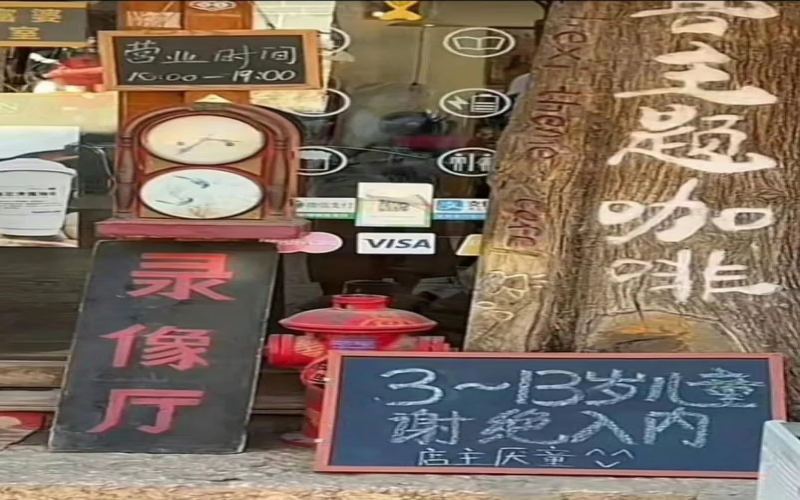
Cafés successively refusing entry to children sparks heated debate, South Korea's "no-kids zones" phenomenon also draws attention
Recently, two incidents of coffee shops refusing to serve children have caused a stir online. On one side, a coffee shop in China put up a notice at its entrance reading "Children aged 3 to 13 are not admitted," with the owner openly stating they "dislike children"; on the other, South Korea's increasingly common "No Kids Zone" has once again become a topic of discussion, with some establishments even posting signs reading "dog yes, kids no." Supporters argue that coffee shops are meant to stay quiet and that businesses have the right to avoid risks; opponents criticize the signs as discriminatory. What social nerves does this debate about "child aversion" actually touch? And what predicament of public space is reflected in the "bratty kids' parents" that young people complain about? [more…]
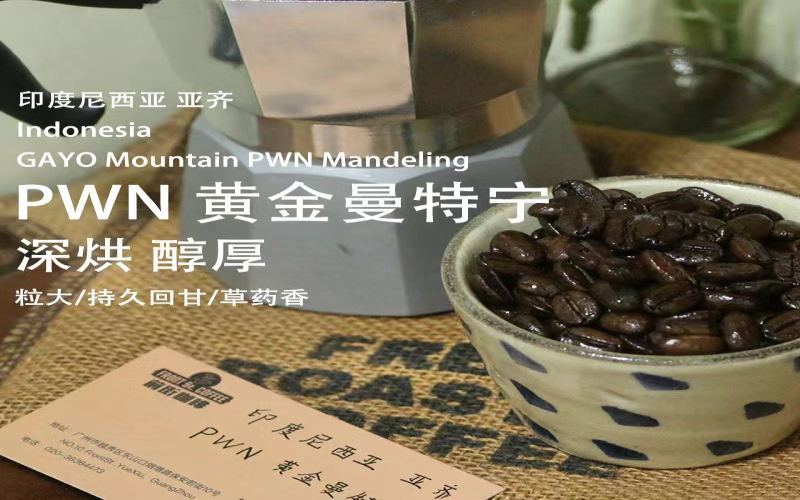
How to Choose Among Indonesian Mandheling Coffee Bean Brands? A Flavor Analysis of Front Street Coffee PWN Golden Mandheling vs. Lintong Mandheling
Mandheling is the representative coffee of Indonesia, but with a confusing array of brands and grades on the market, how can one select an authentic Mandheling with consistent quality? This article, from the perspective of Front Street Coffee, sorts out the origin background, variety characteristics of PWN Company's Golden Mandheling and the flavor logic brought by the wet-hulling process, and compares it with the everyday-drink positioning of Lintong Mandheling. It also explains in detail Indonesia green bean G1 grading, three-time hand sorting and density-color sorting standards, as well as the cupping performance of nuts, dark chocolate, spices and caramel under medium-dark roasting, and finally includes KONO dripper three-stage brewing parameters, helping coffee enthusiasts build a systematic framework for Mandheling purchasing and tasting. [more…]
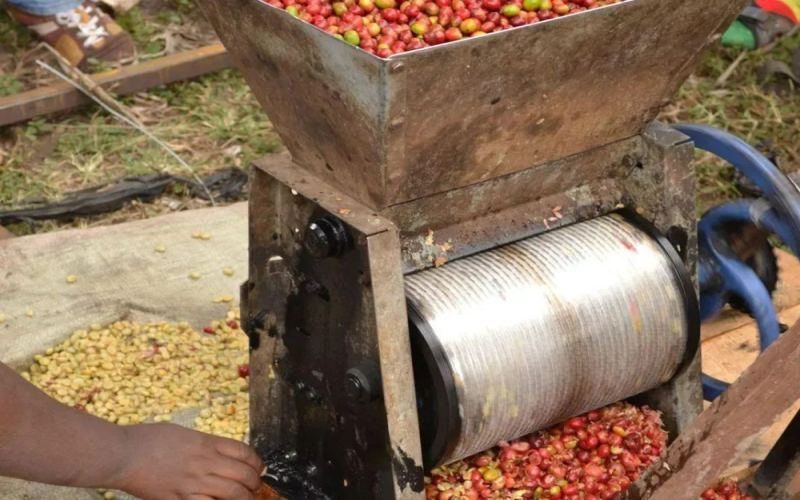
How the Indonesian Wet-Hulling Method Shapes the Unique Flavor and Origin Story of Sumatra Mandheling
Sumatra, with its volcanic soil, high-altitude mountains, and humid climate, has given rise to the world-famous Mandheling coffee. To cope with the rainy environment, local farmers invented the wet-hulling method—a unique semi-washed process that not only shortens the drying cycle but also gives the beans their signature woody, spicy, and herbal notes. From Lake Toba to Lake Tawar, from the Mandailing people to the Gayo people, different producing regions and ethnic groups together have shaped the rich character of Mandheling. Meanwhile, the Golden Mandheling introduced by Indonesia's PWN company, through strict selection and exclusive trademark registration, has become synonymous with specialty Mandheling. The Golden Mandheling that Front Street Coffee stocks year-round comes from PWN. This article will take a deep dive into the technical details of wet hulling, the origin stories of Mandheling, and the grading standards and cupping performance of Golden Mandheling. [more…]
A Complete Guide to Indonesia's Wet-Hulling Method: The Origins of Sumatra Mandheling's Unique Flavor and Its Grading Standards
Wet hulled is a green bean processing method uniquely developed by Indonesian coffee farmers to cope with the humid, rainy climate. It greatly shortens the drying cycle and gives Mandheling its signature woody and herbal notes. This article will take you into Sumatra's two core producing regions—Lake Toba and Lake Tawar—sort through the specific operational steps of wet hulled processing, analyze how it shapes Mandheling's full-bodied style, and explain the rigorous screening standards and grade classifications of Indonesian PWN company's Golden Mandheling. Whether you are a beginner just getting to know Mandheling or a seasoned enthusiast wanting to understand the differences between processing methods in depth, this article will offer practical reference. [more…]
In-Depth Analysis of Coffee Roasting: A Complete Guide to First and Second Crack Temperature Points and the Taste Differences Between Light and Dark Roasts
The flavor code of coffee beans is, to a large extent, written during the roasting stage. From green beans to that rich aroma in the cup, every temperature milestone and every crack sound during roasting directly affects the acidity, bitterness, and aroma layers in the final result. Where exactly is the dividing line between dark roast and light roast? What do first crack and second crack each mean? Under different roast levels, how will coffee's taste change? This article will systematically sort through roasting terminology and core principles to help coffee lovers build a clear cognitive framework for roasting, while also drawing on the practical experience of Front Street Coffee to provide reference for everyday bean selection and brewing. [more…]
Century-old Chinese medicine shop Tonghanchuntang enters the beverage industry, launching new attempts with health-boosting milk tea and coffee
In recent years, cross-industry ventures have become a popular trend, and even century-old traditional Chinese medicine shops are joining the beverage market. Following Tongrentang, Tonghanchun Tang, with a history of 237 years, has also tested the waters of national-style wellness tea drinks in Shanghai Yuyuan Mall, launching over 30 beverages including wellness teas, fruit teas, milk teas, sparkling water, and coffee. Among them, the wellness milk tea incorporates ingredients such as ginseng, goji berries, and donkey-hide gelatin, while the two wellness coffees focus on American-style black coffee and ginseng honey latte, priced between 20 and over 30 yuan, with the most expensive bird's nest product exceeding 100 yuan. Whether these time-honored brands can win consumer favor through innovation is worth watching. [more…]
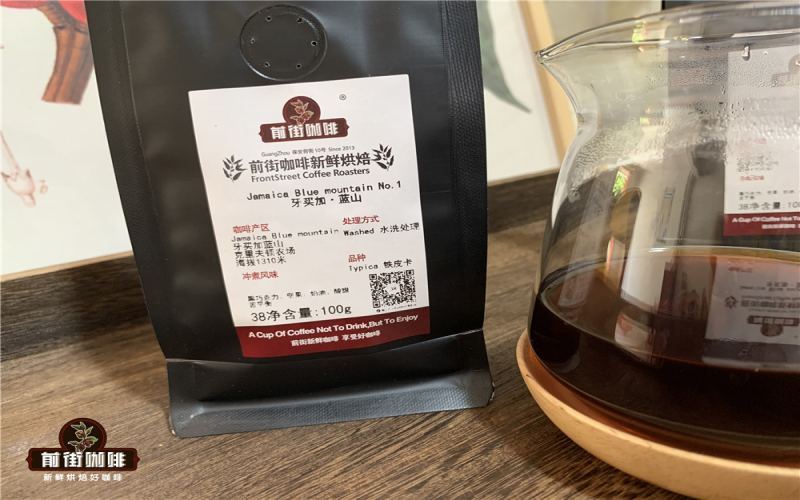
Why Is Jamaican Blue Mountain Coffee Hailed as Top-Tier? A Comprehensive Analysis of Its Pour-Over Flavor and Taste Characteristics
Blue Mountain coffee is often called one of the best coffees in the world. It is neither bitter nor sour, with a balanced flavor, like a cup of silky milk tea, and is therefore affectionately nicknamed "beauty coffee" by enthusiasts. But the excellence of Blue Mountain coffee is no accident—the unique geographical location of Jamaica's Blue Mountain range, its tropical rainforest climate, volcanic soil, and the Typica variety cultivated over more than two hundred years together create its unreplicable flavor. The Jamaican government implements strict grading and production-limiting, quality-preserving policies for Blue Mountain coffee, with unique standards from harvesting and processing to packaging. This article will comprehensively sort out the growing environment, variety characteristics, grading system, and processing methods of Blue Mountain coffee, and include Front Street Coffee's pour-over parameters and flavor description, taking you deep into this finest of the finest. [more…]